Contents
When water damage occurs, it’s vital to act swiftly and methodically. You’ll need to assess the affected areas and gauge moisture levels accurately. Start by removing standing water to prevent further damage and mold growth. Once that’s done, employing dehumidifiers and air movers will be necessary to facilitate drying. Understanding these steps can make a significant difference in the restoration process and ensure your space is returned to its original condition.
Key Takeaways
- Assess the extent of water damage and categorize severity to determine appropriate drying strategies and equipment usage.
- Utilize moisture meters and hygrometers to monitor moisture levels in affected materials and adjust drying techniques as needed.
- Employ dehumidifiers strategically in high-humidity areas to control moisture levels and prevent mold growth during the drying process.
- Remove standing water promptly with pumps and wet vacuums to facilitate quicker drying of structures and reduce further damage.
- Regularly check and document moisture levels throughout the drying process to ensure thorough restoration and guide equipment adjustments.
Assessing the Extent of Water Damage
Before you can effectively dry structures after water damage, you need to assess the extent of the damage thoroughly. Start your water damage assessment by identifying affected areas, including walls, ceilings, floors, and furniture. Use moisture meters to measure dampness levels in various materials; this helps pinpoint hidden moisture that could lead to mold growth.
Next, conduct a damage severity analysis by categorizing the damage into three classes: Class 1 (minimal) to Class 4 (severe). This classification guides your drying strategy and resource allocation.
Document your findings meticulously, as this information is essential for insurance claims and restoration planning.
Engaging with a team experienced in water damage assessment ensures a thorough approach, fostering a sense of belonging among you and your peers.
Accurate assessments lay the groundwork for effective drying, ultimately restoring safety and comfort to the affected environment.
Safety Precautions Before Starting the Drying Process
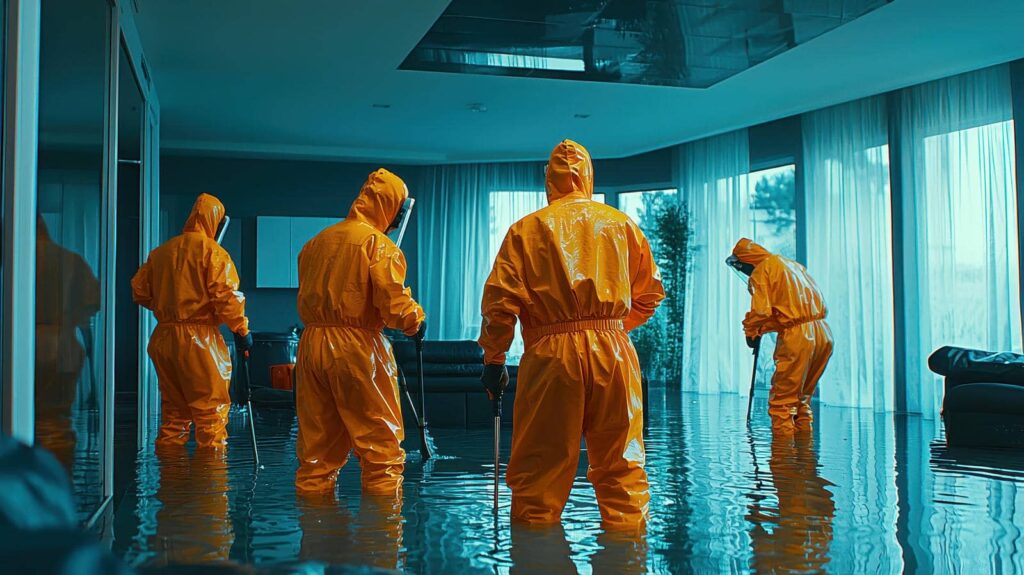
Before you begin the drying process, make certain you’re wearing appropriate personal protective equipment, such as gloves and masks, to safeguard against contaminants.
Check for any electrical hazards in the affected area; confirm that power sources are turned off to prevent shock.
Taking these safety measures is essential for protecting yourself and maintaining a safe working environment.
Personal Protective Equipment
When tackling water damage restoration, using the right personal protective equipment (PPE) is essential for your safety and health.
Start by wearing gloves to protect your hands from contaminants and sharp objects. A mask or respirator will shield you from mold spores and airborne pollutants, ensuring personal safety.
Eye protection is vital; goggles will keep debris and chemicals out of your eyes. Don’t forget waterproof boots to prevent slips and keep your feet dry.
Additionally, consider wearing coveralls to protect your skin from harmful substances. Choose high-quality protective gear that fits well and meets safety standards.
Electrical Safety Measures
Ensuring electrical safety is essential as you prepare to dry structures after water damage. Begin by conducting a thorough circuit inspection to identify any potential electrical hazards. Disconnect power to affected areas before proceeding. Use ground-fault circuit interrupters (GFCIs) for added protection.
| Safety Measure | Description |
|---|---|
| Circuit Inspection | Check for damaged wiring and connections. |
| Disconnect Power | Ensure no current flows to wet areas. |
| Use GFCIs | Prevent electrical shock risks. |
| Inspect Equipment | Verify all drying equipment is safe to use. |
Removing Standing Water Efficiently
To remove standing water efficiently, start by utilizing pumps to extract large volumes of water quickly.
Next, employ wet vacuums for smaller areas and hard-to-reach spots where pumps can’t access.
Finally, promptly remove furniture to prevent further water damage and facilitate the drying process.
Use Pumps Effectively
Although water damage can be overwhelming, using pumps effectively is crucial for removing standing water quickly and efficiently.
Understanding pump types and performing regular pump maintenance can make a significant difference. Here are some key considerations:
Select the right pump type: Submersible pumps are ideal for deeper water, while utility pumps suit shallow areas.
Inspect and maintain pumps: Regularly check for clogs and verify the power supply is functional.
Position pumps strategically: Place them in the lowest areas to maximize water removal.
Monitor progress: Keep an eye on water levels and adjust pump settings as necessary.
Employ Wet Vacuums
Employing wet vacuums is an effective way to tackle standing water, especially in areas where pumps may struggle.
You’ll want to choose the right wet vacuum types for your specific needs, as options vary in power and capacity. For efficient vacuuming, start by clearing debris from the area, ensuring the vacuum’s inlet isn’t obstructed.
Position the vacuum close to the water source and maintain a steady, even pace as you move it across the affected surface. If you encounter thick mud or sludge, consider using a vacuum designed for such conditions.
After removing the bulk of the water, follow up with dehumidifiers to expedite the drying process. This method protects your structure and fosters a sense of community in restoration efforts.
Remove Furniture Promptly
Removing furniture promptly is essential for minimizing water damage and facilitating effective drying. The quicker you act, the better the chances for furniture restoration and reducing potential losses.
Here’s how to efficiently manage this process:
Assess the Damage: Check items for moisture levels and structural integrity.
Use Moving Assistance: Enlist friends or professionals to help you lift and transport heavy pieces safely.
Dry Items Off-Site: If possible, move furniture to a dry area or storage to prevent further exposure.
Document for Insurance: Take photos of damaged items before removal for your insurance claims.
Using Dehumidifiers for Effective Moisture Removal
When dealing with water damage, using dehumidifiers is vital for effective moisture removal and preventing further complications. Proper dehumidifier placement is important to maximize efficiency. Make sure the units are strategically positioned in areas with the highest humidity levels to achieve ideal humidity control.
Here’s a quick reference table to guide your dehumidifier setup:
| Area | Recommended Dehumidifier Placement | Purpose |
|---|---|---|
| Basement | Center of the room | Remove excess moisture |
| Living Room | Near windows | Combat outdoor humidity |
| Bathroom | Close to shower/tub | Address localized moisture |
| Kitchen | Near appliances | Control humidity from cooking |
| Bedroom | Center or near closets | Prevent mold in fabrics |
Air Circulation Techniques to Aid Drying
Once you’ve set up your dehumidifiers, enhancing air circulation can greatly expedite the drying process. Effective airflow management is essential to ensure that moisture evaporates quickly from surfaces.
To optimize air circulation, consider these techniques:
Position fans strategically: Place drying equipment like fans near wet areas to maximize airflow directly over damp surfaces.
Create cross-ventilation: Open windows and doors to allow air to flow freely through the space, facilitating moisture removal.
Use air movers: High-velocity air movers can remarkably boost airflow, accelerating the drying of carpets, walls, and furniture.
Adjust airflow direction: Direct fans upwards to help circulate warm air, which can improve evaporation rates.
Monitoring Moisture Levels Throughout the Drying Process
To ensure effective drying after water damage, consistently monitoring moisture levels is essential, as it helps you assess the progress and adjust your drying strategies accordingly.
Utilize moisture monitoring tools, such as hygrometers and moisture meters, to obtain accurate readings of affected materials and air. These instruments provide real-time data, allowing you to pinpoint areas that require additional attention.
Integrate your moisture monitoring with the drying equipment in use, such as industrial dehumidifiers and air movers. By aligning your drying methods with moisture level readings, you can optimize airflow and humidity control, ensuring a thorough drying process.
Regularly check moisture levels at different intervals to track improvement and make informed decisions about when to shift equipment or techniques. This systematic approach fosters a sense of control and belonging within your team, as everyone works collaboratively towards restoring the affected space effectively.
Cleaning and Disinfecting Affected Areas
After verifying that moisture levels have markedly decreased, it’s crucial to clean and disinfect the affected areas to prevent mold growth and restore hygiene.
Effective cleaning and sanitization help safeguard your environment and promote a sense of well-being.
Follow these steps for thorough surface sanitization:
- Use a mild detergent to remove dirt and debris from surfaces.
- Apply a disinfectant specifically designed for mold prevention; confirm it meets EPA standards.
- Focus on high-touch areas, such as doorknobs, light switches, and countertops, as these are prone to contamination.
- Allow disinfectants to dwell on surfaces for the recommended time to maximize efficacy.
Preventing Future Water Damage Incidents
While it’s impossible to eliminate all risks of water damage, implementing proactive measures can greatly reduce the likelihood of future incidents. Start by evaluating your property for vulnerabilities.
Employ effective waterproofing techniques, such as applying sealants to your foundation and ensuring that roofs and windows are watertight. Regularly inspect and maintain these areas to prevent deterioration.
Next, invest in reliable drainage solutions. Ensure gutters are clean and direct water away from your home’s foundation. Consider installing French drains or sump pumps in areas prone to flooding.
Additionally, landscape with proper grading to redirect water flow away from your property.
Finally, monitor your plumbing system for leaks and address them immediately. By taking these steps, you’ll foster a safer environment, fostering a sense of security within your community and among your family.
Each action contributes to building a resilient structure against future water damage.
Recap
In the battle against water damage, swift action is your best ally. By meticulously evaluating, removing standing water, and employing dehumidifiers and air movers, you create a dry haven where mold fears to tread. Keep a vigilant eye on moisture levels as you navigate this restoration journey, ensuring every corner is cleaned and disinfected. With these strategies, you reclaim your space and fortify it against future deluges, turning potential disaster into a triumph of resilience.
Recent Posts
5 Best Structural Drying Techniques for Flood Recovery
Flood recovery isn’t just about drying out; it’s a complex science that can make or
Top Structural Drying Techniques for Flood Recovery
When faced with flood recovery, understanding top structural drying techniques is essential. Effective drying speeds
Top 5 Structural Drying Methods for Flood Damage
When dealing with flood damage, selecting the right structural drying method is essential for effective